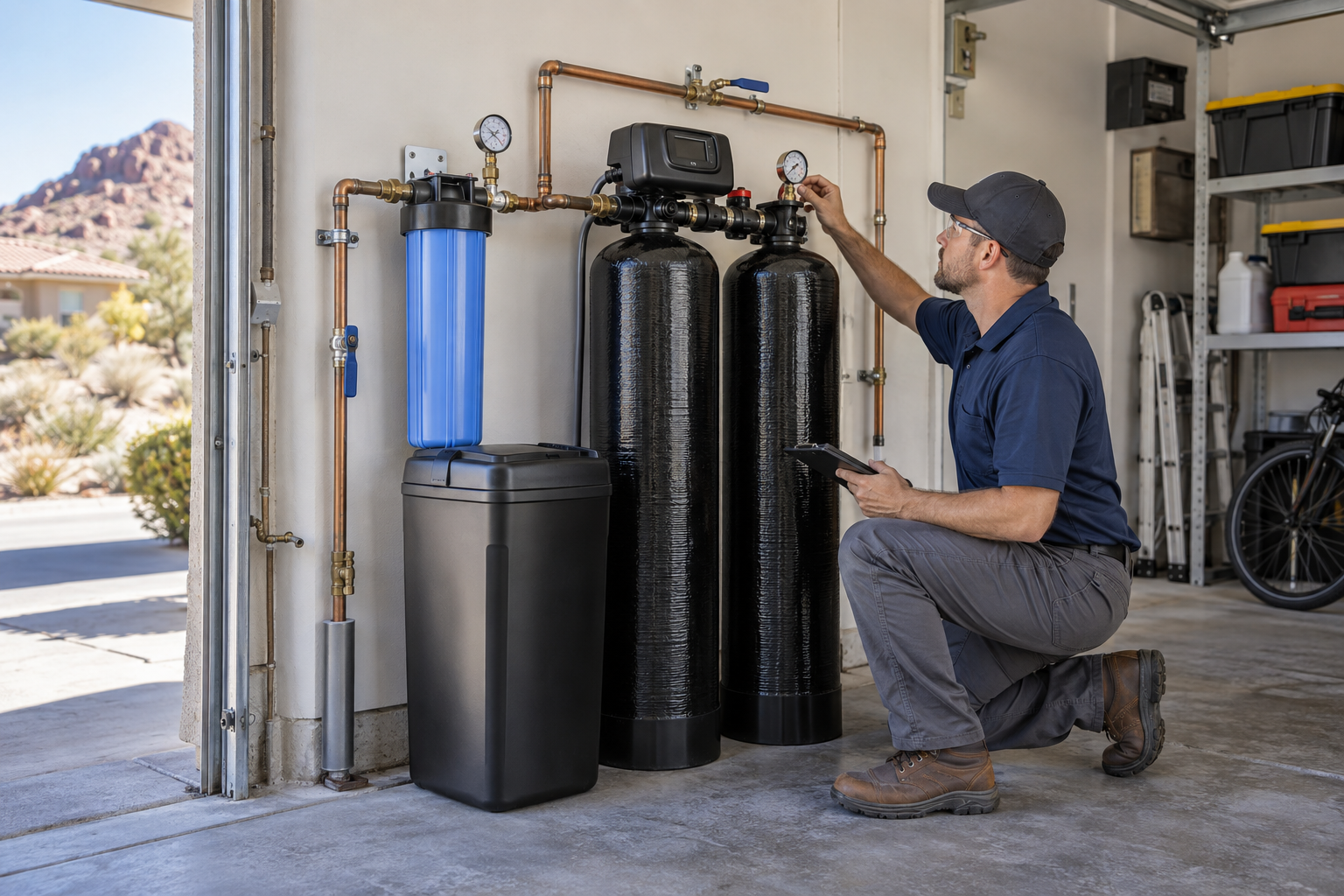
Choose the sample before choosing treatment
Consider this option for uncertainty about hardness, taste, odor or a specific substance. Compare field screening or properly collected certified laboratory analysis against a specific goal and the actual property conditions.
A TDS reading or color demonstration is not a safety test. Field hardness screening and certified laboratory analysis have different purposes and prices. Ask what a free visit includes; no free laboratory panel is promised.
What to verify
- Hardness: record untreated inlet and treated outlet separately
- A named substance: obtain laboratory bottles and instructions first
- Supplier uncertainty: identify the water bill and applicable report
Ask the responding independent provider to confirm address coverage, equipment compatibility and service availability before expecting an appointment.
Compare purchase and ongoing cost
The $0–$450+ allowance is illustrative only. Equipment specification, access, labor and warranty can change the price. Separate consumables, planned service, replacement parts and any required plumbing or electrical work.
Read the related decision guide · Compare the next question · Take the written-scope checklist
Henderson source boundary
The City's 2026 report describes 2025 public-system monitoring. City typical hardness guidance is 304 ppm / 18 gpg; SNWA separately gives regional 280 ppm / 16 gpg guidance. Confirm supplier and measure the parameter used to size treatment.
Henderson report and hardness reference · SNWA process comparisons · Read the local evidence